
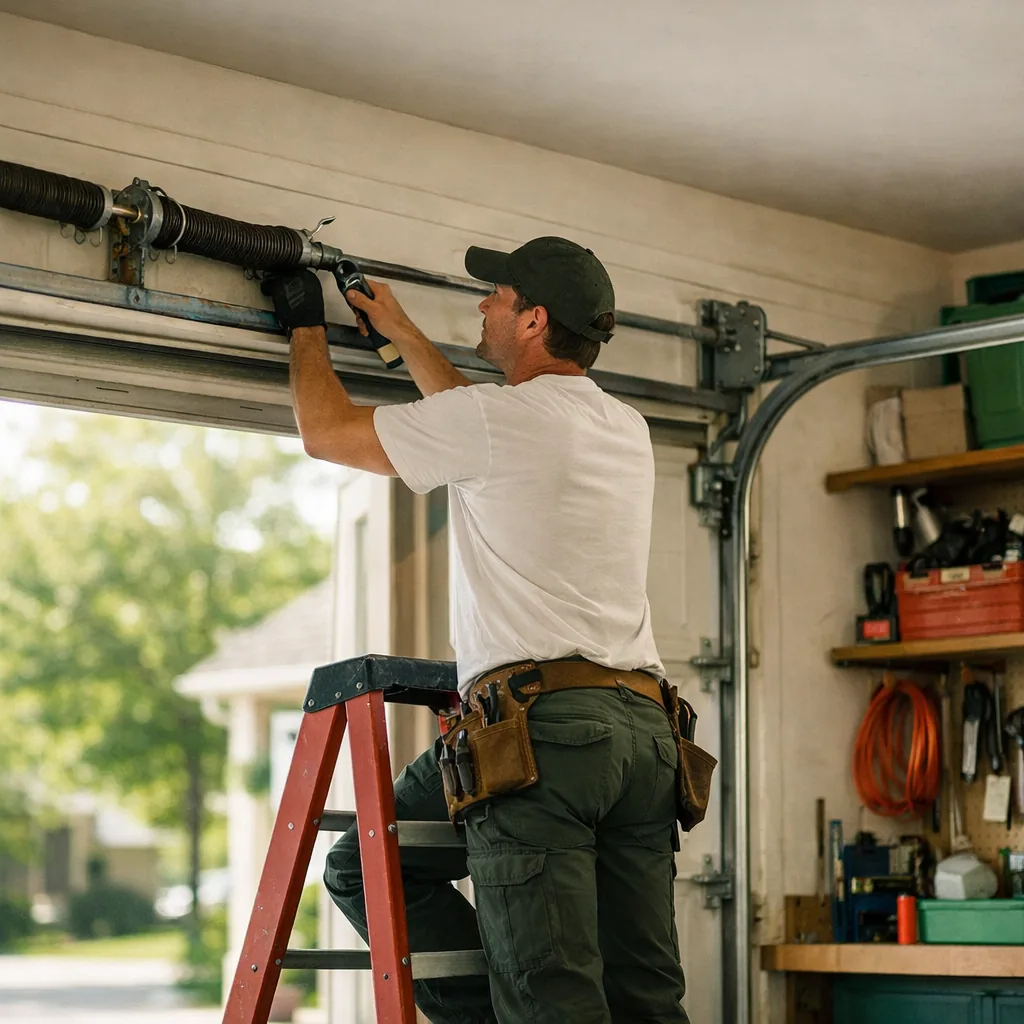
Spring repair · Zionsville, IN
Garage Door Spring Repair
A loud bang from the garage and a door that will not lift usually means a broken spring. We come to your Zionsville home, replace the spring, check the cables, and explain the work and the price before it starts.
- Licensed and insured
- Upfront quote
- Parts-and-labor warranty
Request a Call Back
Torsion and coil springs
Garage door spring repair for torsion and coil springs
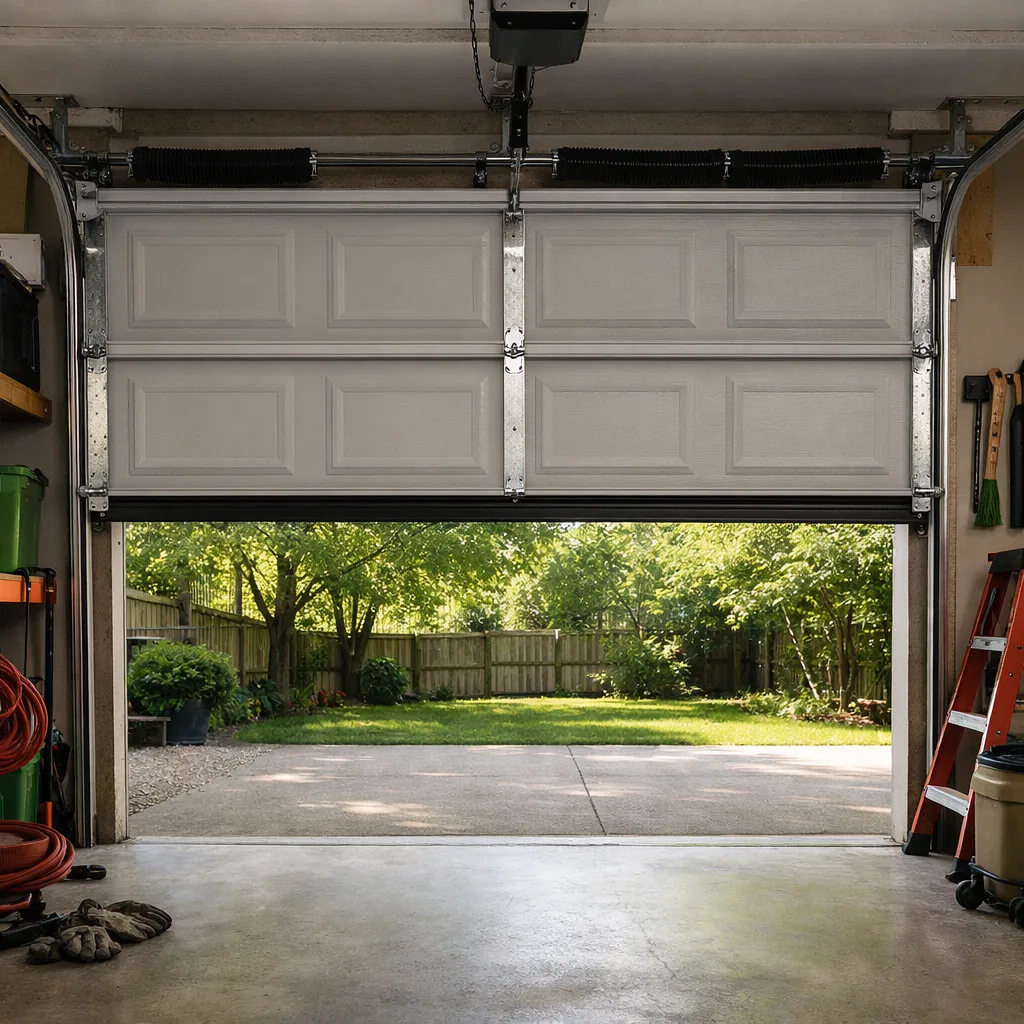
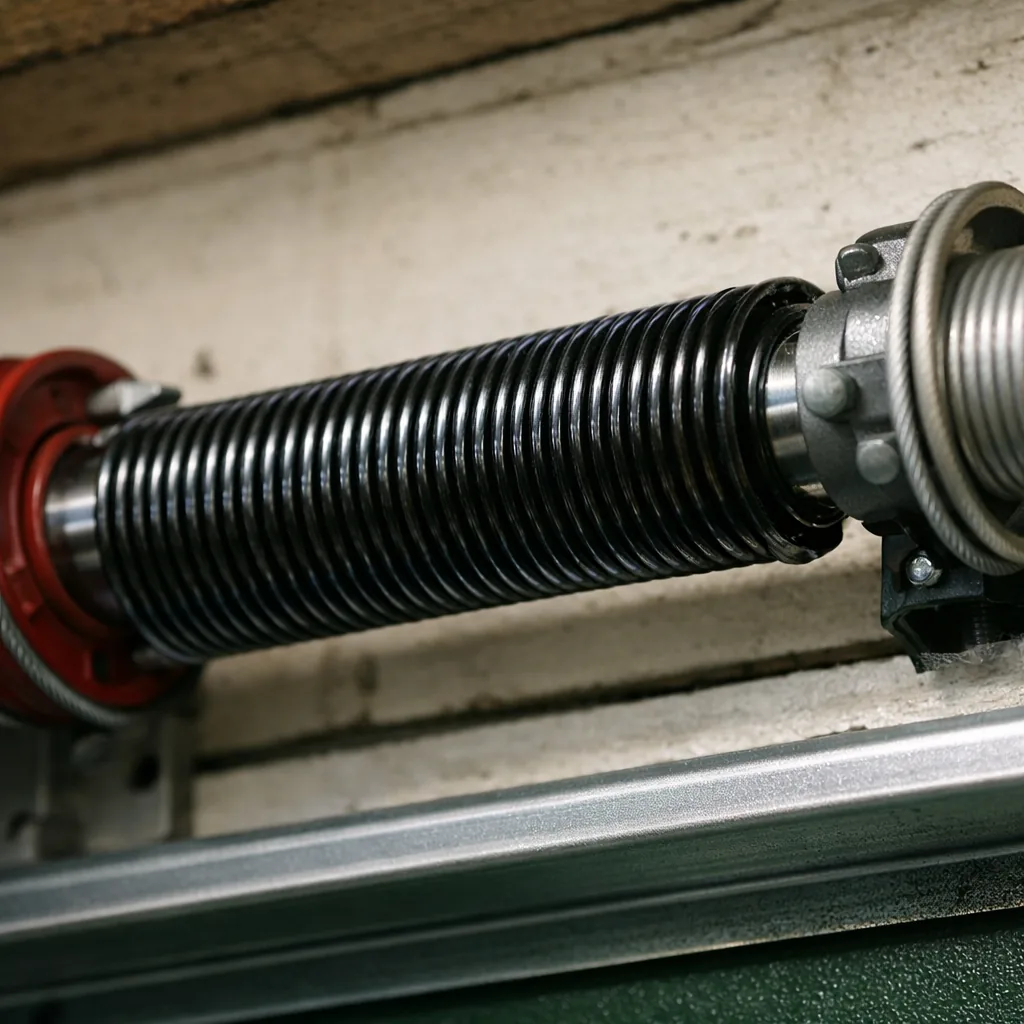
A garage door weighs far more than an opener can lift on its own. The springs carry that weight. Torsion springs sit on a steel shaft at the top of the door opening and twist as the door travels. Extension springs, the long coils that run beside the horizontal tracks, stretch and relax instead. Both types store a great deal of tension, and both are built for a set number of cycles, one cycle being a single open and close. Standard springs are commonly rated around ten thousand cycles, and high-cycle springs are rated well beyond that. A household that uses the door several times a day will wear through a standard spring sooner than one that opens it rarely.
A broken spring is easy to recognize once you know the signs. There is often a loud bang from the garage when it lets go. The door then feels heavy, rises only a few inches, or will not move, and the opener strains and stops. On a torsion spring you can usually see a gap in the coil. On an extension spring, the broken coil hangs loose or a cable trails across the floor. Stop pressing the button once you see these signs, because running the opener against a dead spring wears out its gear and motor.
A spring that has been carrying the door for a long time has often been straining the opener as well. If the door still misbehaves after it is balanced again, repairing the opener is the next job to look at.
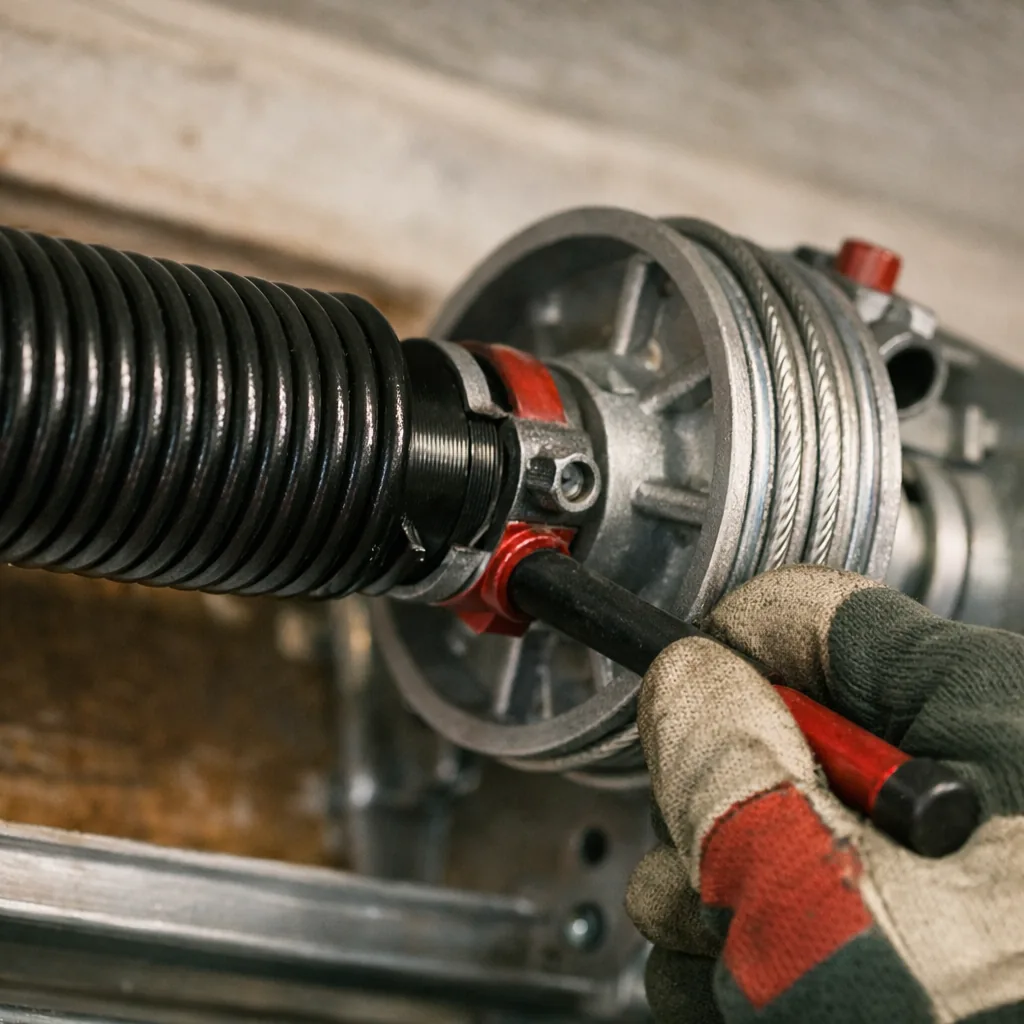
After a spring breaks
What we check when a spring breaks
Spring type and size
A replacement has to match the door's weight. We measure the wire size, the inside diameter and the length, and match the cycle rating to how often the door is used. A spring that is too light leaves the door heavy; one that is too strong makes it fly up.
The second spring
A two-spring door has a pair that have worked equally hard. When one breaks, the other is the same age and close behind it, so we talk through replacing both together.
Cables and drums
A spring that snaps can whip against a cable or damage a drum. We look for frayed strands, kinks and a cable that has slipped off its drum before the door is put back in service.
Rollers, hinges and tracks
A door that dropped suddenly or was forced up by hand can leave a bent track, a cracked hinge or a roller out of its channel. We repair what the failure damaged.
Bearings and the shaft
On a torsion setup, the center bearing and end bearings carry the shaft. A dry or worn bearing makes the new spring work harder, so we check them at the same visit.
Balance after the repair
With the opener disconnected, a properly balanced door stays put when lifted by hand to about halfway. We set the tension until it does, then reconnect and test the opener.
The replacement
How a spring replacement goes
-
01
You call and describe what happened
Tell us whether you heard a bang, whether the door moves at all and what kind of springs you can see. Leave the door where it is.
-
02
We come out and inspect the springs and cables
The technician confirms the break, identifies the spring type and size, and checks the cables, drums and bearings around it.
-
03
We explain what we found and the price
You hear what needs replacing, whether we recommend replacing one spring or both, and the upfront quote, before any work begins.
-
04
We replace the spring and balance the door
The new spring is fitted and set to the door's weight, the hardware is checked, and the opener is tested against the repaired door.
Broken spring
A door that will not lift is not something to force.
Leave it down, tell us what you heard, and we will come out, replace what broke and explain the work before it begins.
Spring work
Spring replacement and finished work
Spring questions
Spring repair questions
Can I fix my garage door spring myself?
Is replacing a garage door spring hard?
How much does it cost to replace a garage door spring?
Is it worth fixing a garage door spring?
How long does a spring replacement take?
What should I do after a spring breaks?
Spring trouble
Heard a bang and the door will not lift?
Leave the door down and tell us what happened. We will come to your home, check the spring and the cables, and explain the fix before any work starts.