
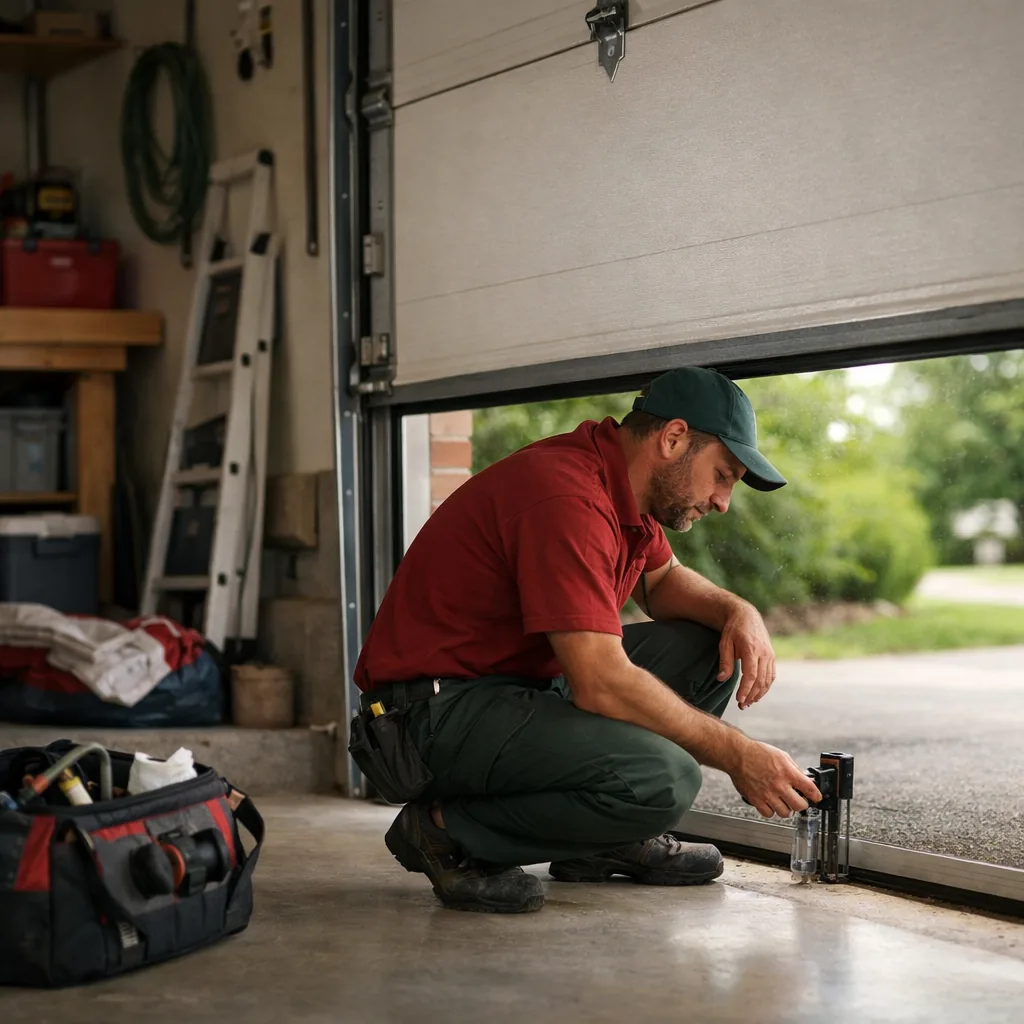
Garage door repair · Lawrence, IN
Garage Door Repair in Lawrence, IN
Doors that go down and bounce back up, stop short of the floor or refuse to close. We come to your garage, find what is setting the door off, and explain the fix and the price before any work starts.
- Licensed and insured
- Upfront quote
- Parts-and-labor warranty
Request a Call Back
Doors that reverse
Garage door repair in Lawrence for a door that reverses or won't close
Garage door repair in Lawrence, IN most often starts with the same complaint: the door comes down, touches the floor or stops just short of it, and then climbs back up. That is the opener doing what it was built to do. Every automatic opener has a safety reversing system, and when the door meets something it did not expect, it turns around. The trouble starts when a misaligned sensor, a dirty lens or a travel setting that has drifted makes the opener believe something is in the way when nothing is.
Lawrence is a city in Lawrence Township, Marion County, and one of four excluded cities in the county, on the northeast side of Indianapolis. It is home to Fort Benjamin Harrison within Fort Harrison State Park. We come out to Lawrence garages the way we reach any home in the metro, and a door that reverses gets the same careful check whether the opener is new or has been on the ceiling for years. Low sun shining straight into a photo eye can blind it, so a door that refuses to close at one time of day and works fine at another is a pattern we ask about on the first call.
A door that reverses has a short list of suspects. The photo eyes sit near the floor on either side of the opening, and if one has been knocked even slightly off line, the beam breaks and the door reverses. Dirt, a spider web or a glare on the lens does the same thing. If the eyes check out, we look at the travel and force limits, the balance of the door and the track for anything that makes the door drag. When the sensors and the door are sound, the fault sits in the opener itself, and opener repair is the next step.
Sensors, limits, balance
What we check first on a door that reverses or won't close
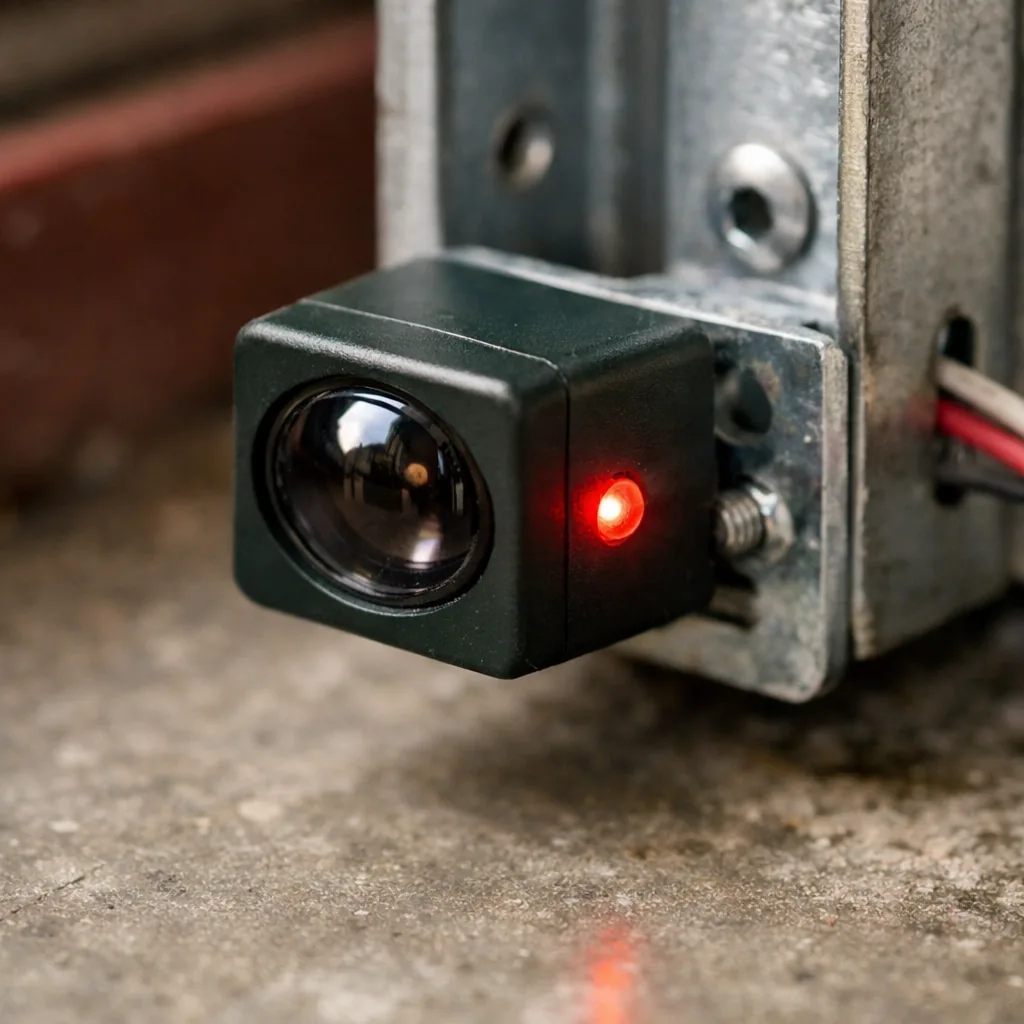
Photo eye alignment
The two eyes must face each other squarely, and the safety standard sets their height at no more than 6 inches off the floor. We check the height, the angle and the bracket, then re-aim whichever eye has drifted.
Lenses and wiring
We clean both lenses, trace the thin wire along the wall and ceiling for a pinch or a chewed spot, and check the connection at the opener. A loose wire shows up as a light that flickers when the door moves.
The indicator lights
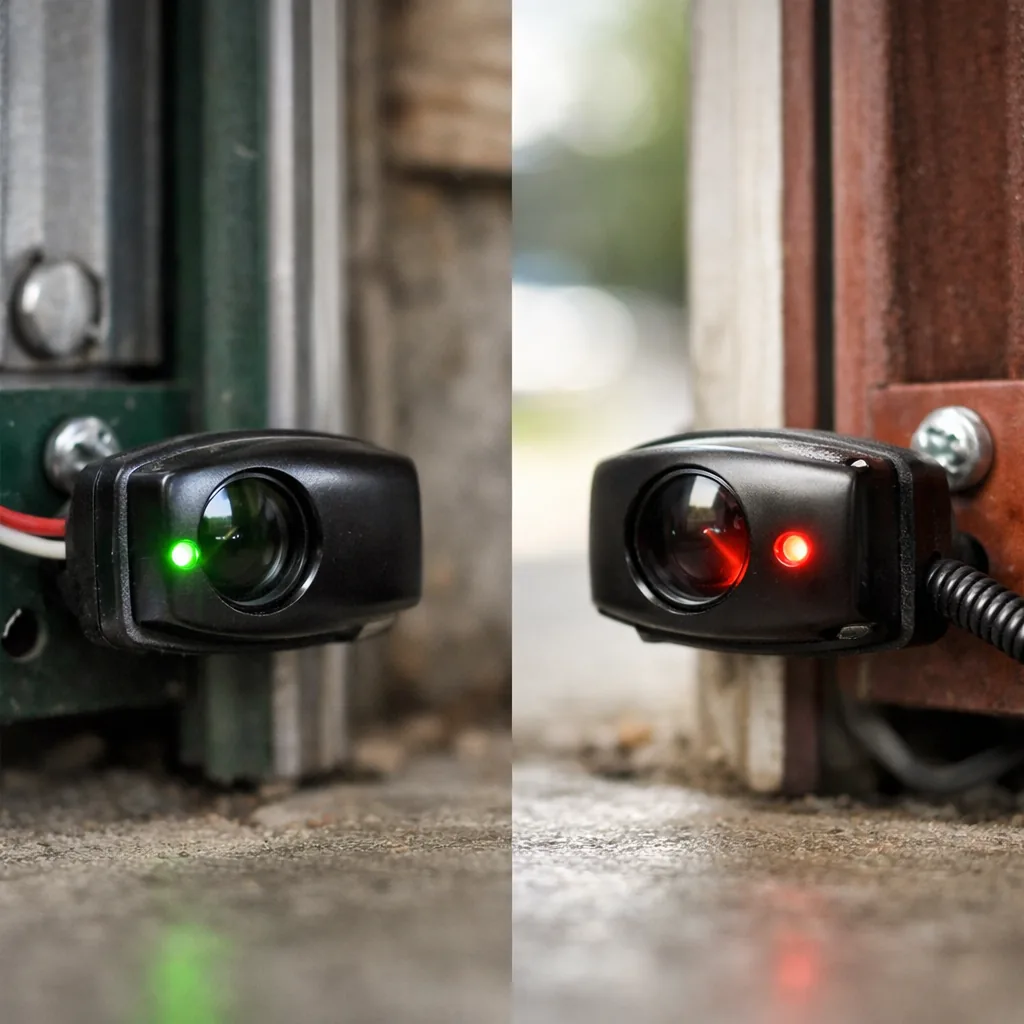
Most eyes carry a small light that shows whether the beam is lined up. The colors differ by brand, but on most models a steady light on both eyes means the beam is good, and a dim or blinking one means it is not.
Travel and force limits
If the door reverses the moment it reaches the floor, the down limit may be set too far, so the opener reads the floor as an obstruction. We adjust the limit, then test it again.
Door balance and track
A door that is heavy on one side makes the opener work harder and can trip the force setting. We disconnect the opener, lift the door by hand to feel the balance, and look along the track for bends and dragging rollers.
The reversal test
After the repair we lay a board flat on the floor in the door's path. The door has to touch it and turn around. If it does not, the job is not finished.
Step by step
How a repair visit goes
-
01
You tell us what the door does
Describe the behavior: does it reverse at the floor, partway down, or only on some days? Mention any lights flashing on the opener. That tells us what to expect before we arrive.
-
02
We come out and test the door
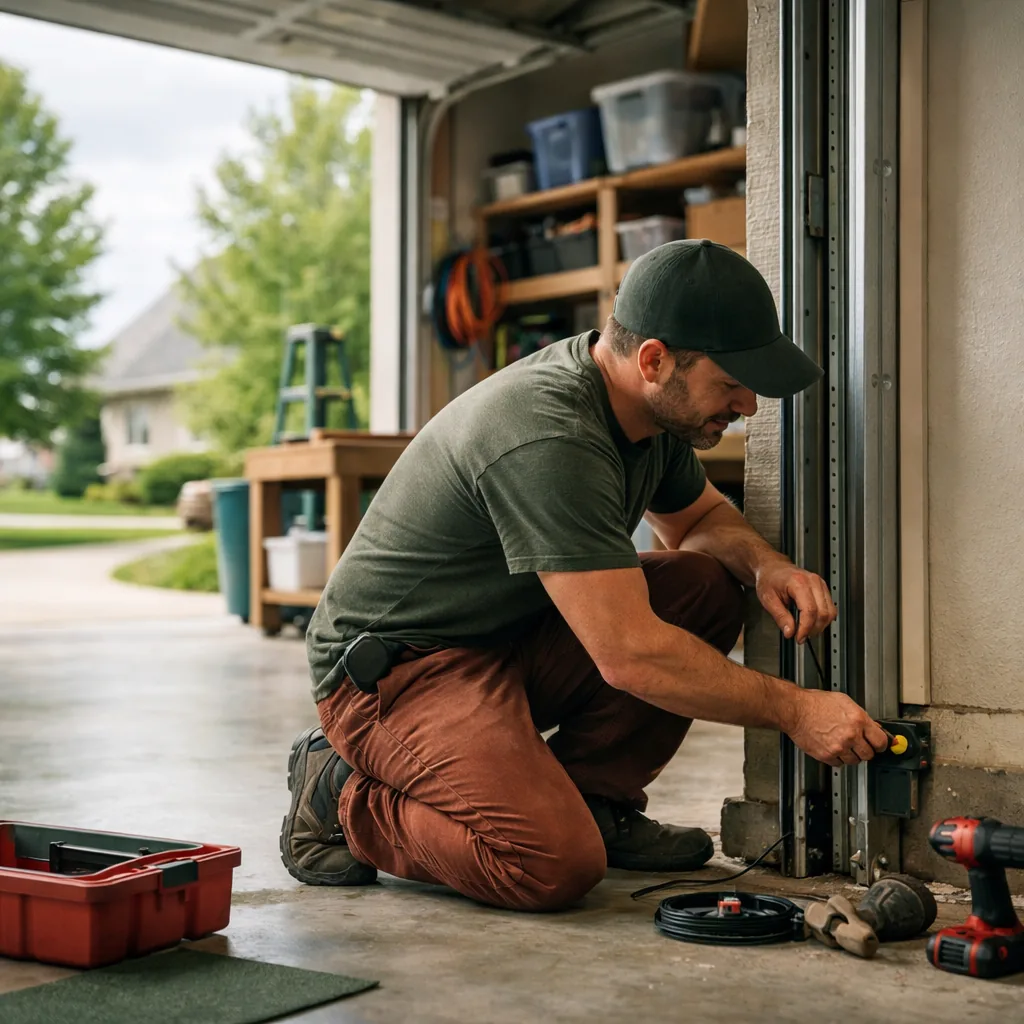
A uniformed technician arrives at your garage, runs the door through a few cycles and checks the eyes, the limits, the balance and the track in that order.
-
03
We explain what we found and quote the price
You hear the cause in plain words and get an upfront quote before any work begins. If you decide not to go ahead, nothing has been started.
-
04
We fix it and prove it works
Most sensor and limit repairs are finished in the same visit. We close the door several times and run the reversal test before we leave.
Reversing door
Door going down and coming right back up?
Tell us what it does and when it does it, and we will tell you what it likely needs before we ever arrive.
Sensor repairs
Sensors realigned and doors closing the way they should
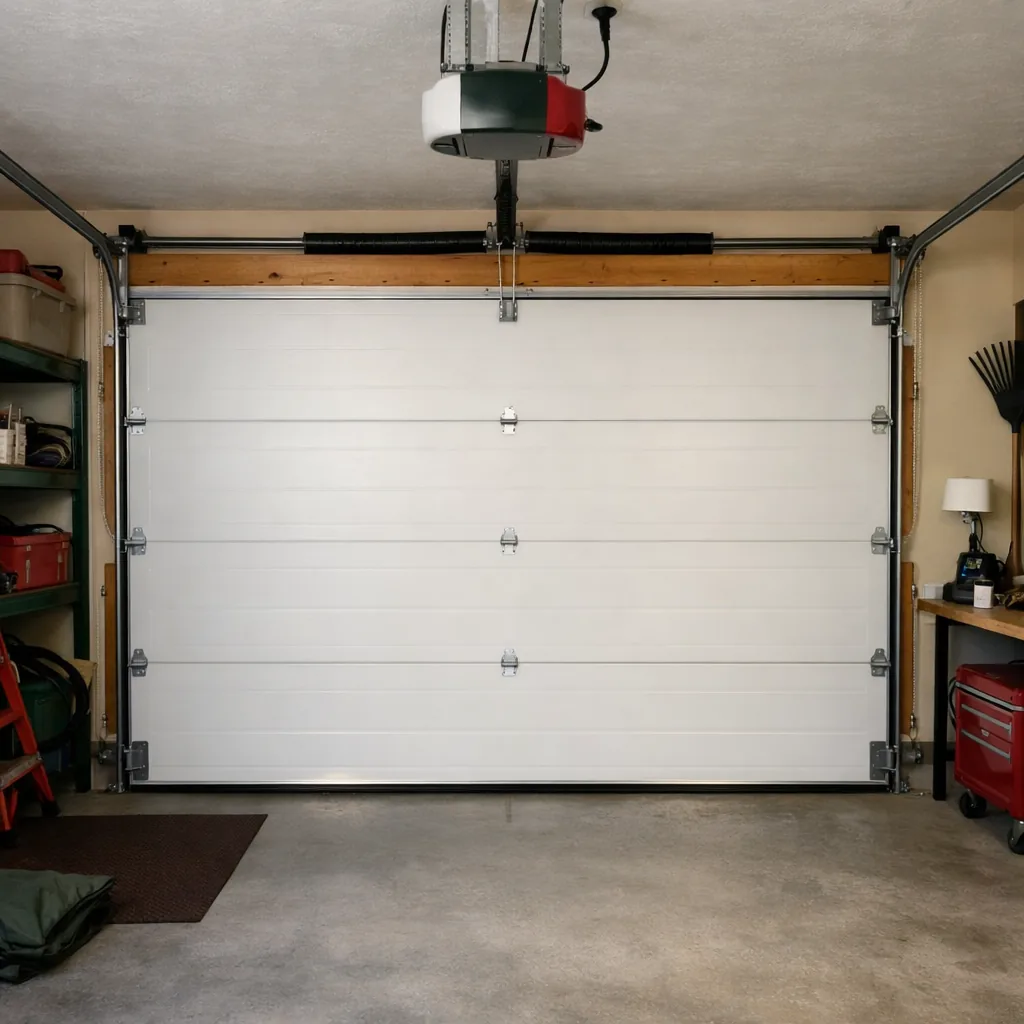
Reversing door questions
Questions about a garage door that reverses
Is it safe to keep using a door that reverses on its own?
What does it mean when one sensor light is green and one is yellow?
Does unplugging the opener reset it?
How is the cost of a reversing repair worked out?
Is it worth repairing the door, or should I replace it?
What should I have ready when I call?
Are your repairs covered by a warranty?
Lawrence, IN
Door won't stay closed?
Leave the door where it is and tell us what it does. We'll come out, check the eyes, the limits and the track, and explain the fix before any work starts.