
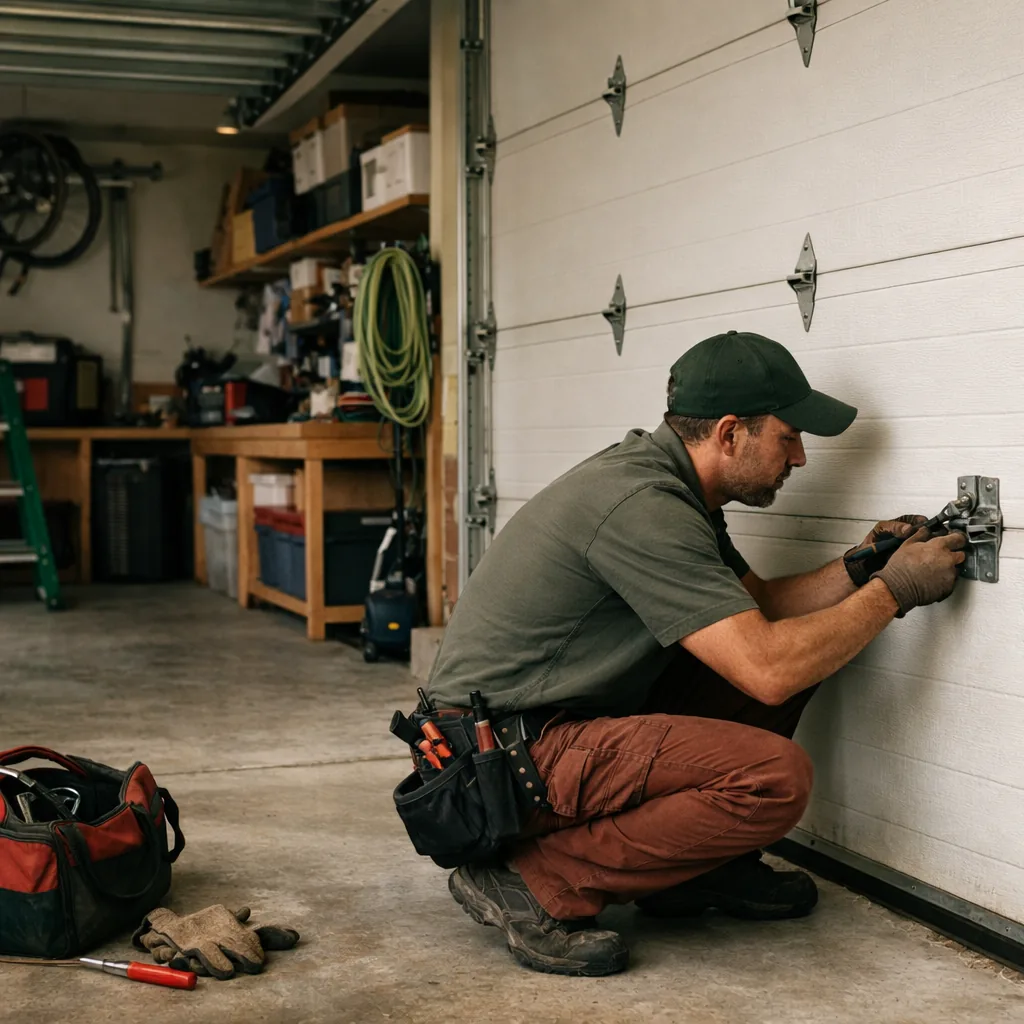
Garage door maintenance · Zionsville, IN
Garage Door Maintenance
A tune-up and safety inspection for the springs, cables, rollers, hinges and opener, so wear gets caught before it turns into a breakdown. We come to your garage, explain what we find, and give you the price before any work begins.
- Licensed and insured
- Upfront quote
- Parts-and-labor warranty
Request a Call Back
Tune-up and inspection
Garage door maintenance: what a tune-up covers
A garage door is a heavy piece of moving equipment, and it runs on parts that wear out: springs, cables, rollers, hinges and an opener. Garage door maintenance is a scheduled inspection and tune-up of those parts, done before one of them fails. We do it for homes in Zionsville, a town in Boone County, Indiana, next to Indianapolis, and in the nearby communities north and west of Indianapolis.
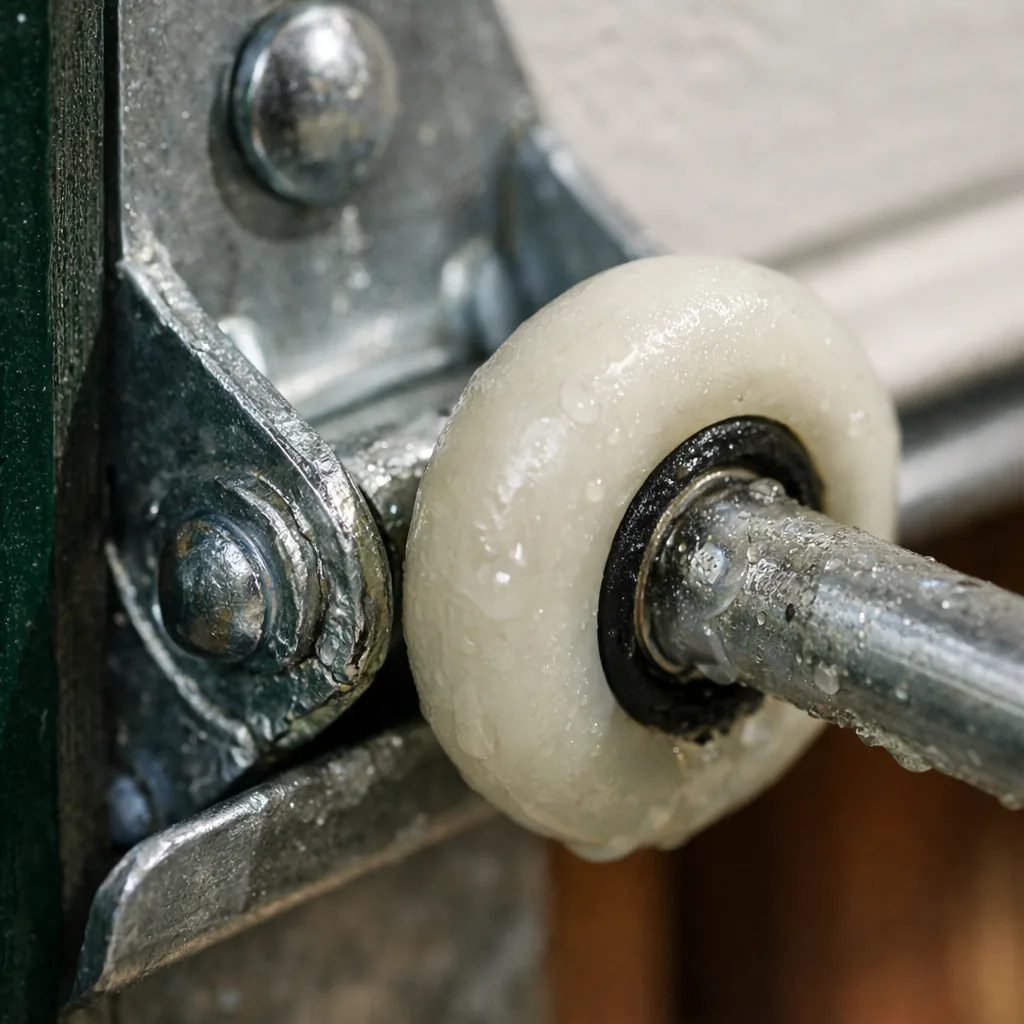
The tune-up itself is hands-on. We lubricate the rollers, hinges, spring coils and bearing plates with a lubricant made for garage doors, and we wipe the tracks clean instead of greasing them, because grease on a track only collects dust. We go over the bolts and brackets, since vibration works them loose a little with every cycle. We lift the door by hand to see whether it is balanced, look at the cables and springs for fraying, gaps and rust, and run the opener through its full travel.
What we find decides what happens next. Most doors need lubrication and small adjustments, and some need a part. A spring that shows wear is better swapped on a calm weekday than after it snaps with the car inside, and replacing a worn spring is a job we can do right after the inspection once you have the price. Cold weather stiffens lubricant and rubber seals, so a check before winter is a sensible time for it.
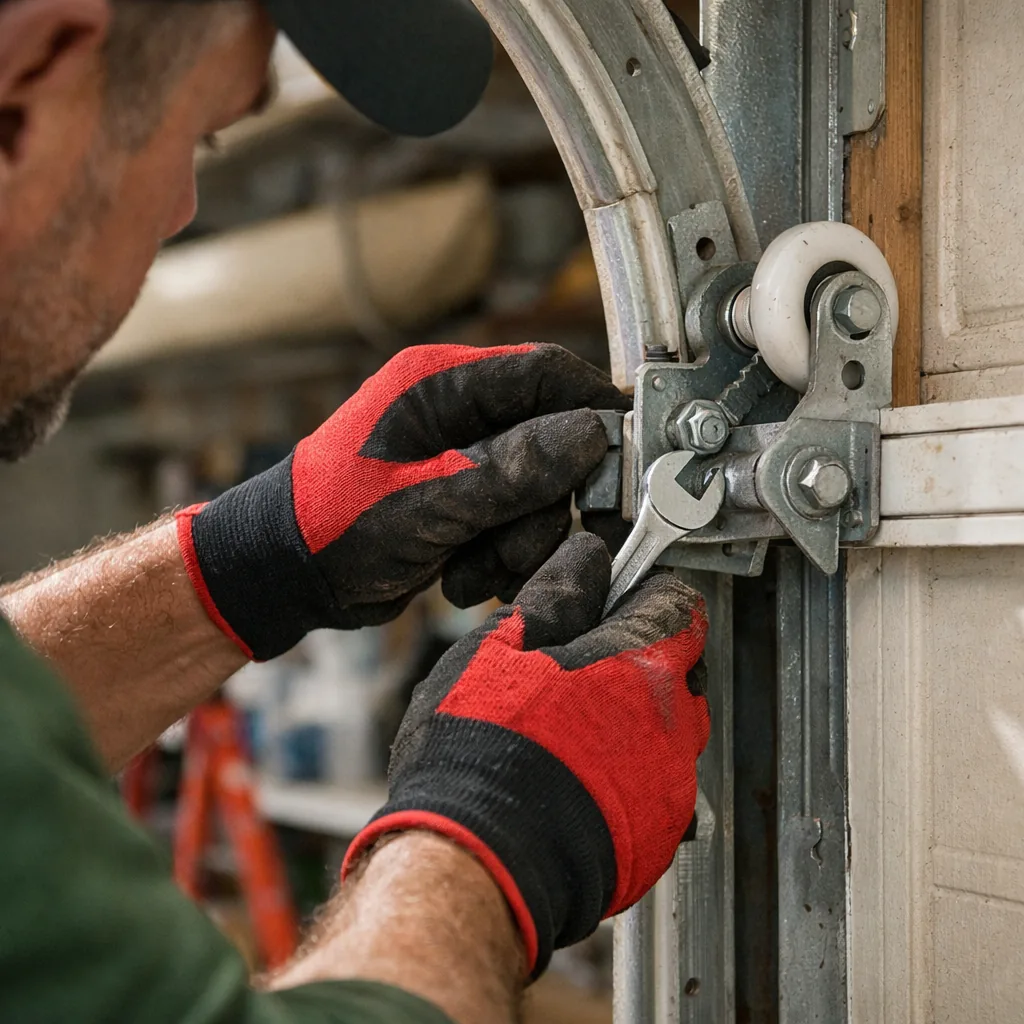
On the checklist
What we check during a garage door inspection
Springs and cables
Springs carry the weight of the door, so we look for gaps in the coil, rust and uneven wear. Cables get checked for fraying near the bottom bracket and at the drums, which is where they fail first.
Rollers, hinges and track
Worn rollers wobble in the track and cracked hinges let a panel flex. We replace what is past use, check that the track is straight and firmly fixed to the wall, and confirm the door travels without catching.
Balance
With the opener disconnected, a balanced door stays where you leave it about halfway up. A door that drifts down or springs up is putting extra load on the opener and the spring, and the fix is an adjustment or a spring replacement.
The opener
For garage door opener maintenance we check the chain or belt, the limit and force settings, the mounting bolts and the remote and keypad. If the opener is failing, a garage door opener repair is usually the next conversation.
Safety reversal and sensors
We lay a board flat on the floor and confirm the door reverses when it touches it, then pass an object through the photo eye beam and check the door stops and goes back up. These are the checks that protect people, pets and cars.
Bolts, brackets and seals
Hinge screws, track brackets and the fasteners holding the opener to the ceiling all loosen over time. We snug them, then look at the bottom seal and weatherstripping for cracks and gaps.
The appointment
How a tune-up appointment goes
-
01
You tell us about the door
Mention any noise, any slow or uneven movement, and anything odd about the remote or wall button. It helps us know where to look first.
-
02
We inspect it
A uniformed technician goes through the springs, cables, rollers, hinges, track and opener, tests the balance and the safety reversal, and explains what each check shows.
-
03
We tell you what we found and the price
If a part needs replacing, you hear the upfront quote before any work begins. Nothing gets swapped that you have not agreed to.
-
04
We lubricate, adjust and test
We finish the tune-up, replace any approved parts and run the door through several full cycles. Repairs and installations are backed by a parts-and-labor warranty.
Noises and slowdowns
A door that has started to squeal, shake or slow down is asking for a look.
Tell us what you are hearing and we will tell you what a tune-up would check.
After the tune-up
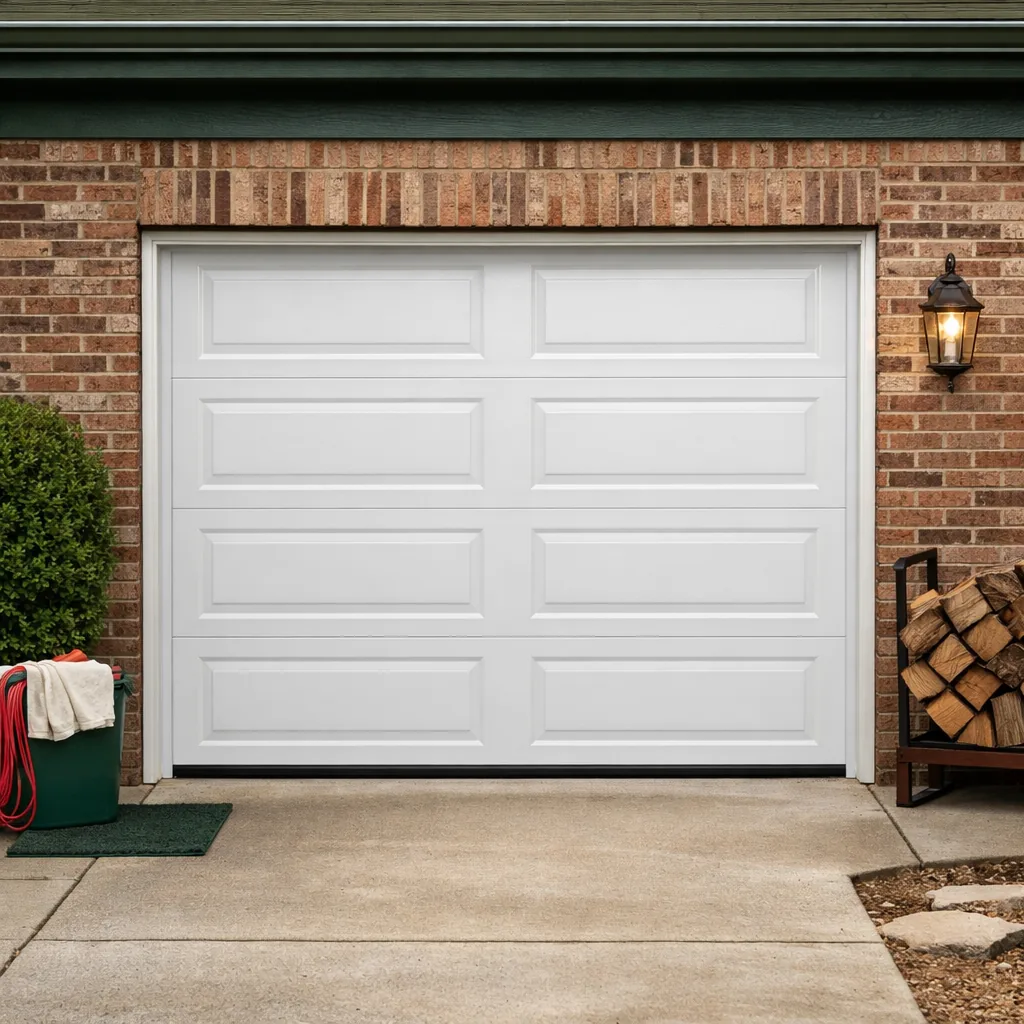
Garage doors after a tune-up
Maintenance questions
Garage door maintenance questions
How often should an automatic garage door be serviced?
How much does a garage door tune-up cost?
Can I lubricate my garage door myself?
Why is my garage door so noisy?
How long do garage doors typically last?
How long does a tune-up take?
Before it breaks down
Door getting louder or slower?
Tell us what it is doing. We will come out, check the springs, rollers and opener, and explain what we found and what it costs before any work starts.