
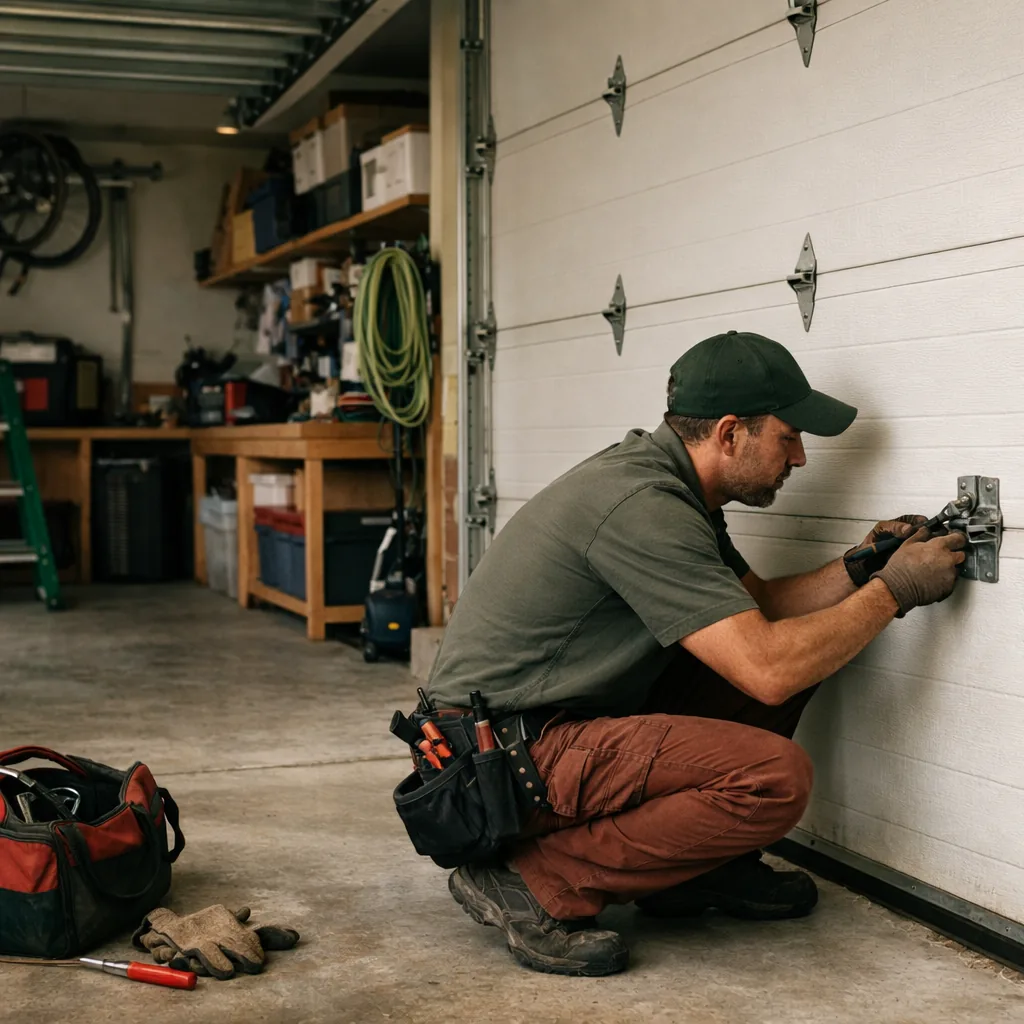
Garage door repair · Plainfield, IN
Garage Door Repair in Plainfield
Grinding, rattling or shaking on the way up is a sign something is loose or worn. We trace the noise to the part, come to your garage, and explain the repair before we start.
- Licensed and insured
- Upfront quote
- Parts-and-labor warranty
Request a Call Back
Noisy garage doors
Where a Plainfield garage door noise comes from
Garage door repair in Plainfield, IN often begins with a sound. A grinding door, a rattle that builds as it climbs, or a shake that runs along the panels is the door reporting a loose or worn part before it fails outright. Each noise has a likely source: a rattle from hinge screws backing out, a grind from rollers that have lost their bearings, a squeal from a dry spring coil, and a bang as it settles from a track that has shifted. We follow the sound to the part instead of guessing, and repair it in your garage.
Plainfield is a town in Guilford, Liberty and Washington Townships in Hendricks County, Indiana. Its population was estimated at 36,074 in 2022. A town of that size has a large number of attached garages, and each one has a door that is raised and lowered every day. That repeated motion shakes fixings loose and wears rollers and hinges, so a noisy garage door in Plainfield is most often a maintenance problem that a repair puts right.
A door that is quiet but slow, or an opener that hums without moving it, is a different fault, and garage door opener repair deals with that.
Following the noise
Tracing the rattle, the grind and the shake
Loose hinges and brackets
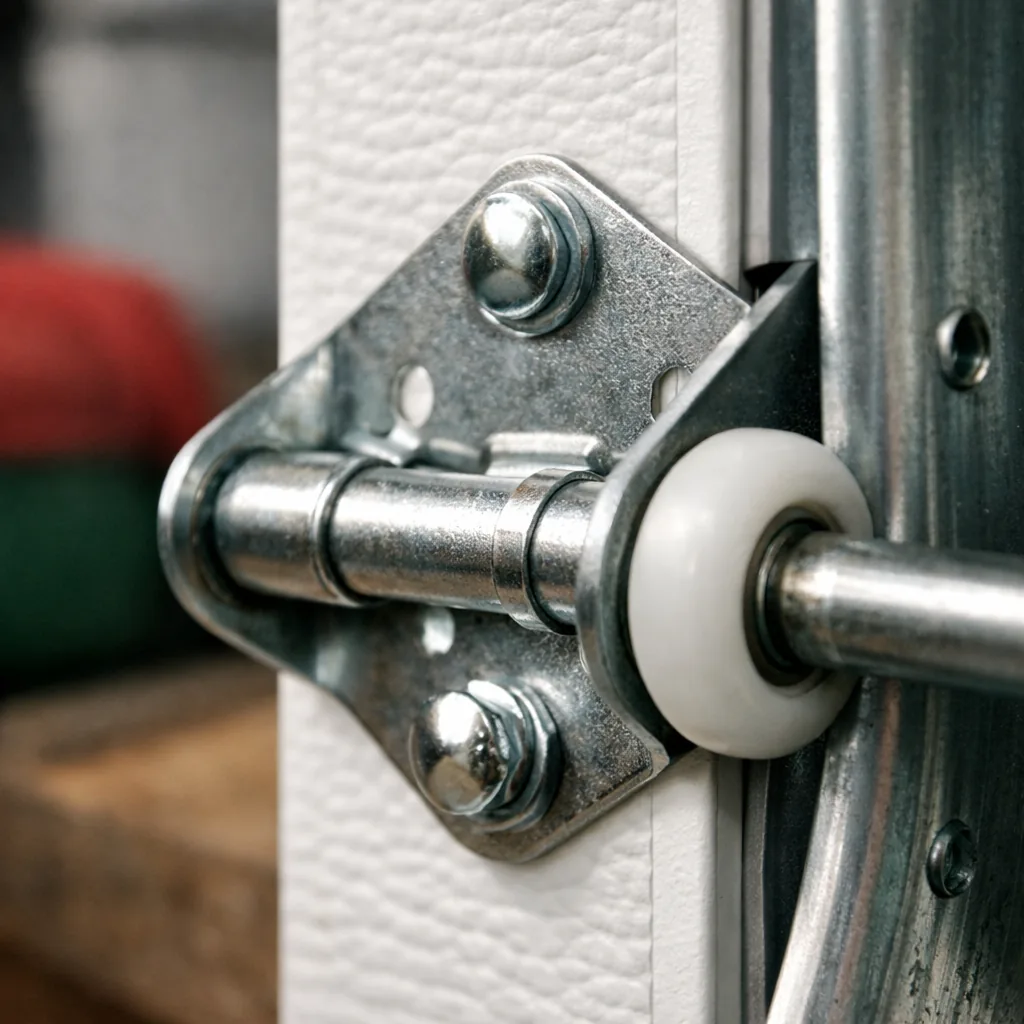
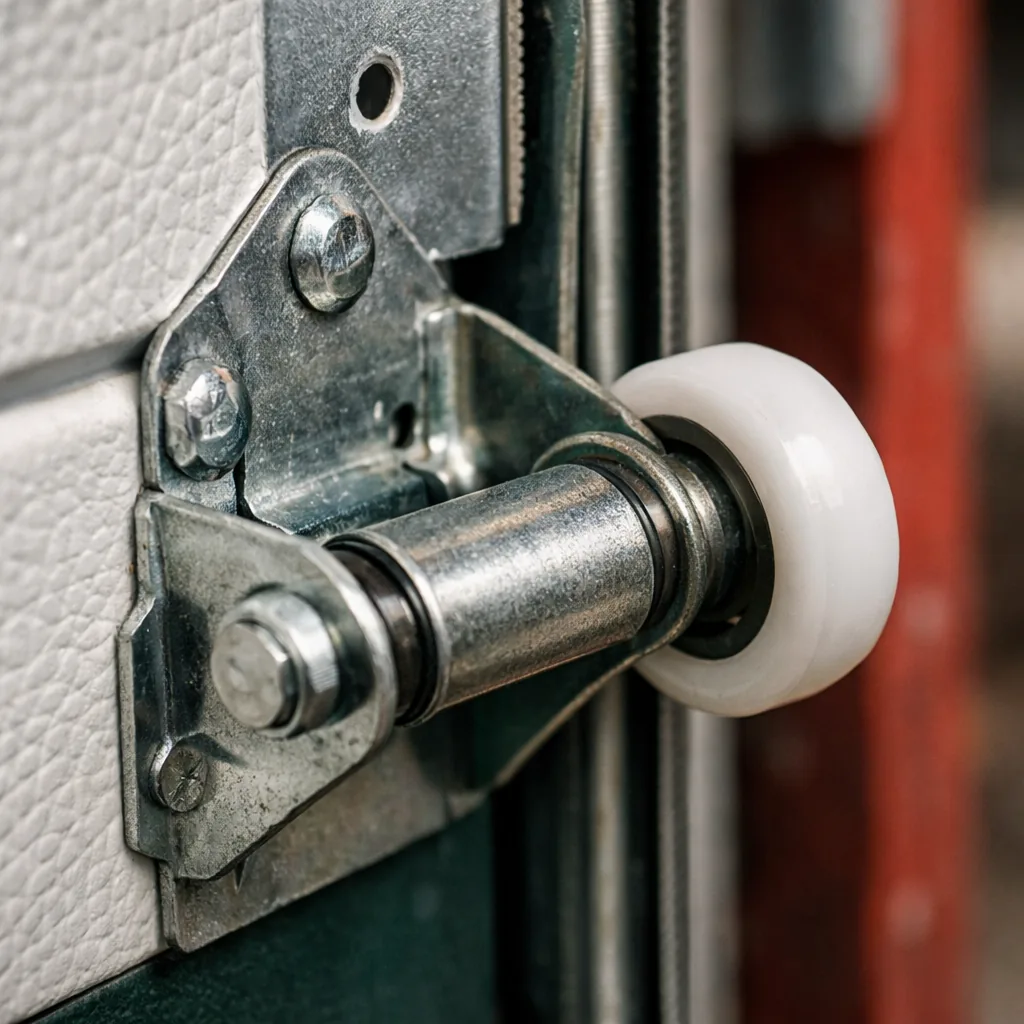
Panels flex and chatter when hinge screws have backed out or the fixing holes have worn oversized. We tighten, reseat with longer screws where the wood has given way, and replace any hinge with a cracked ear.
Worn rollers
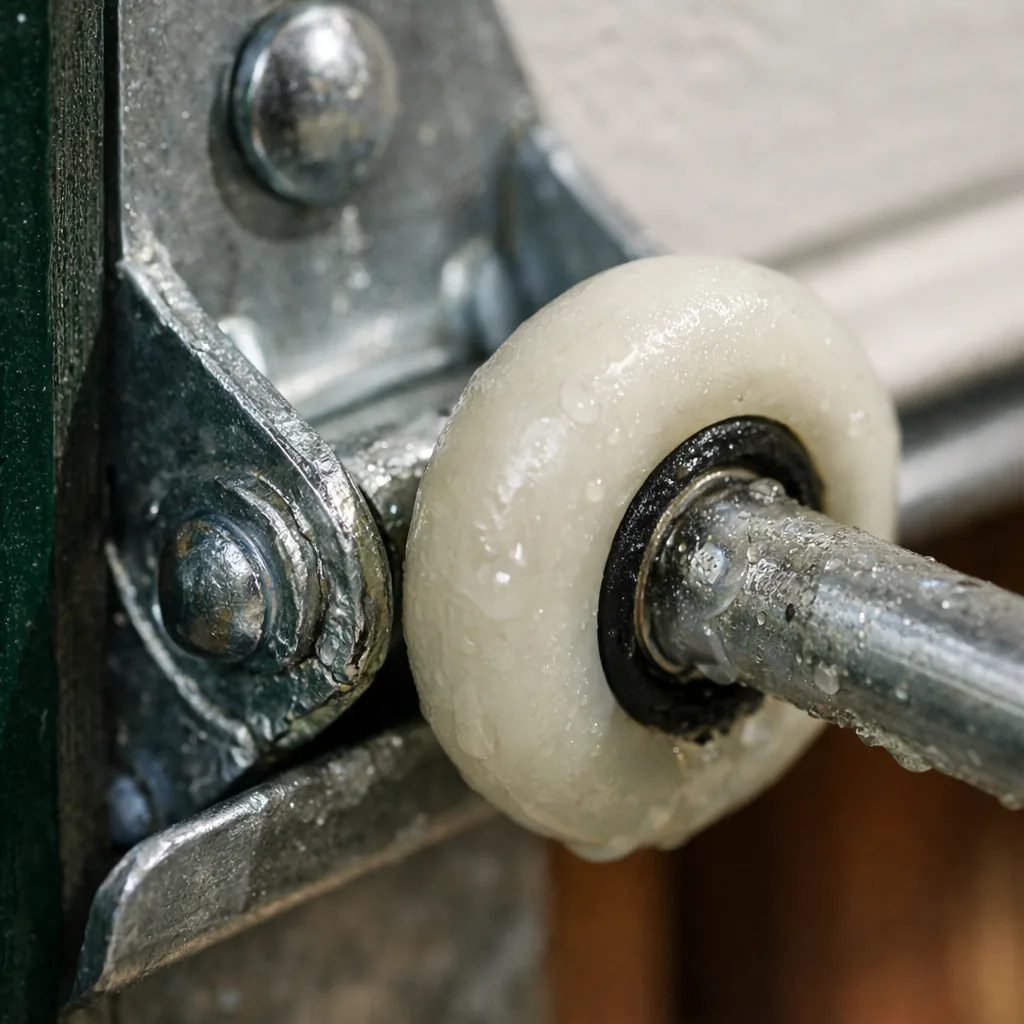
Steel rollers grind against the track once the bearings fail, and nylon rollers crack and rattle. We replace the ones that wobble on the stem and leave sound ones in place.
Track fixings and alignment
Tracks vibrate if their brackets have loosened from the wall or ceiling framing. We bring the track back to level and plumb and fasten it so the door stops shaking.
Springs and lubrication
A dry spring squeals, and one that is stretched or damaged can groan as it flexes under load. We lubricate where it helps and say plainly when a spring needs replacing instead.
Opener mounting
A loose rail bracket or a drifting trolley can add its own clatter to the door's. We check the opener's fixings so we do not blame the door for what the motor is doing.
The visit
From the first call to a quiet door
-
01
You tell us what you hear
A grind, a rattle and a thump are three different jobs. The more precisely you describe it, the better prepared we arrive.
-
02
We come out and listen
The technician runs the door through a full cycle, hand-tests each moving part and finds where the noise starts.
-
03
We explain the cause and quote the work
Our uniformed technician explains what is wrong before starting, and gives an upfront quote so you can decide first.
-
04
We repair, then run it again
Once the parts are replaced or secured, we cycle the door to confirm the noise is gone and the safety reverse still works.
Noisy door
A noise is easier to fix while it is still only a noise.
Tell us what the door sounds like and we will tell you what we expect to find.
Hardware put right
Quiet doors after a repair
Noise and upkeep
Plainfield garage doors: questions about noise and upkeep
Will lubricating the door stop the noise?
Where should the hinges go on a garage door?
How often should an automatic garage door be serviced?
Does unplugging the opener reset it?
What happens on the day of the visit?
Is a rattling door safe to keep using?
Plainfield, IN
Garage door grinding or shaking in Plainfield?
Describe the sound and we will help you work out what to expect. A locally owned and operated team will come out, find the part and explain the repair before any work starts.